





Step 1
To make the dumpling dough, combine the flour and a generous pinch of salt in the bowl of a stand mixer fitted with the dough hook. Mix on low speed, then gradually add the water and oil, until it forms a soft (but not sticky) dough.
Step 2
To make the lamb filling, heat the ghee in a medium frying pan over medium-high heat. Add the onions and cook, stirring, until golden, then add the mince, salt, pepper, and bay leaves. Cook, stirring until the meat is cooked through. Remove from the heat and allow to cool.
Step 3
Preheat the oven to 220°C (200°C fan-forced), then make the dumplings. On a well-floured bench, roll out ¼ of the dough to 1/4 cm thick. Cut the dough into 6 cm discs (you should have about 18 in total by rolling each piece of dough 3 times).
Step 4
Place 1 heaped teaspoon of lamb filling into the centre of each dumpling wrapper, then fold into a crescent-moon shape, lightly moisten the edges with water, then pinch the edges to seal and enclose the dumpling. Transfer the sealed dumpling to a baking paper-lined baking tray, then repeat with remaining dough and filling.
Step 5
Bake the dumplings for 5-8 minutes, or until the dough is lightly golden. Allow to cool. This prevents the dumplings from swelling too much when cooked in the yoghurt.
Step 6
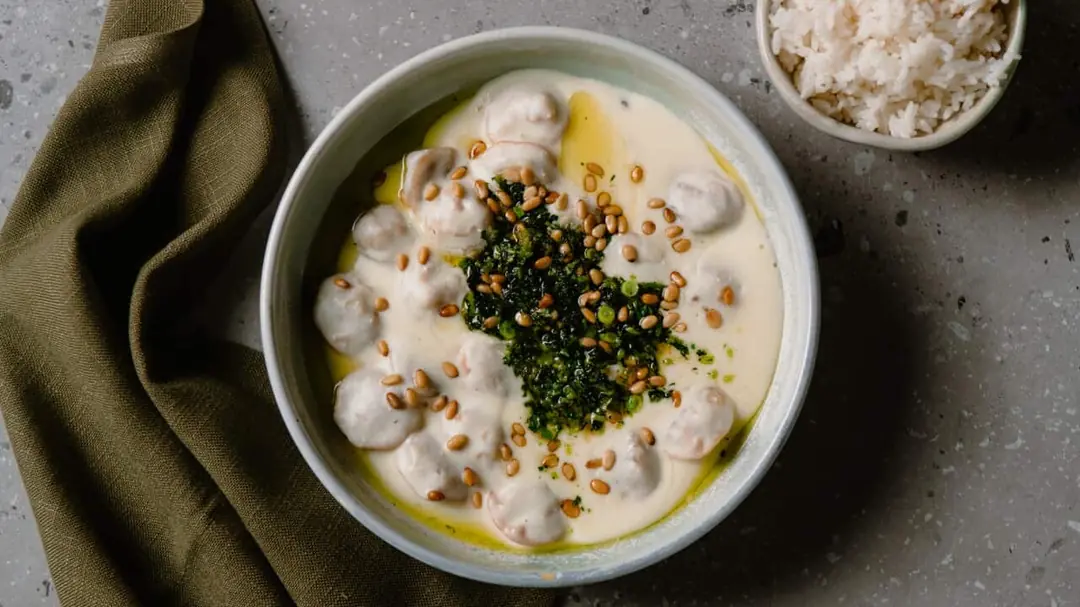
To make the yoghurt sauce, combine the yogurt, cornflour, water, and a good pinch of salt in a large, non-stick saucepan and bring to the boil over medium heat. Stir through the dumplings, until the mixture returns to the boil, then reduce to low heat and cook for a further 10-15 minutes. Transfer the dumplings and sauce to a serving bowl.
Step 7
To serve, heat the remaining ghee in a small saucepan and add the garlic and half the coriander and cook for 1-2 minutes, or until just fragrant. Spoon the flavoured ghee over the dumplings and sauce.
Step 8
Sprinkle the toasted pine nuts and remaining coriander over the dumplings before serving.











 No products in the cart.