





Step 1
The day before you are wanting to cook the pork, unroll the shoulder and place rind side up on a large board. Pat the rind dry and score it at 2cm intervals diagonally ensuring you don’t cut down to the flesh (or the juices of the pork will escape when cooking and it will dry out your pork).
Step 2
Turn over and season the flesh with two big handfuls of sea salt flakes and a generous amount of freshly ground pepper. Dot the 10 garlic cloves on the flesh, pushing them into the flesh where possible. Sprinkle all over with dried chilli flakes and fennel fronds.
Step 3
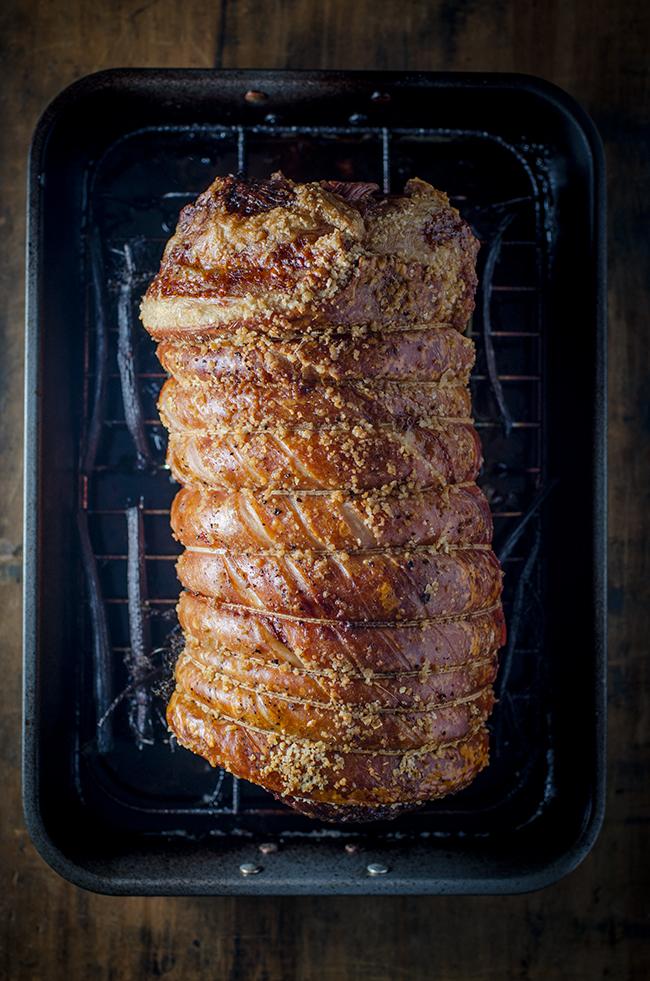
Gently and tightly re-roll the shoulder (noting that it will be harder to roll with the filling) and tie with butchers twine (or re-use the elastic twine if your pork came with it). Place on a rack, lightly cover with cling film, and place in your fridge overnight. The reason you are leaving it overnight is to ensure the skin dries out which makes it easier to achieve maximum crackly on your rind.
Step 4
Remove the pork from the fridge two hours before you are ready to start cooking. You want the pork to come to room temperature as it relaxes the meat and will result in a more tender final product.
Step 5
30 minutes before your pork goes into the oven, preheat it to 220° Celsius (430° Fahrenheit).
Step 6
Once at room temperature, drizzle the olive oil on the pork 1 tablespoon at a time and massage it into the scoring. Then, taking 2-3 generous handfuls of sea salt flakes and press it into the rind ensuring you have a visible layer of salt on the rind. Ensure you have a roasting tray with a roasting rack large enough for your pork. Cut your fennel stalks in half, then lay them on the roasting rack making a bed for your pork, and transfer the pork to the tray. Into the bottom of the tray pour 2 cups wine and 1 cup water.
Step 7
Place in the oven and bake at 220° Celsius (430° Fahrenheit) for 20 minutes (this blast of heat at the beginning with get your crackling off to the best possible start). After 20 minutes, turn down the oven temperature to 180° Celsius (350° Fahrenheit) and roast for 40 minutes per kilogram – for the 6 kg pork shoulder it will take 4 hours – turning it around every hour or so and adding the remaining wine and water halfway through.
Step 8
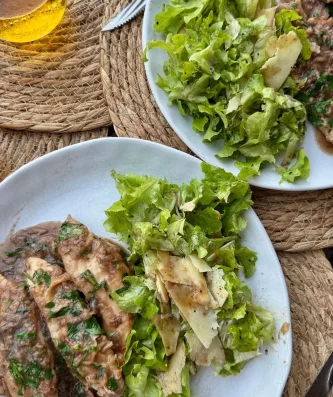
Remove from oven and transfer the pork to a large board. Cover with aluminium foil and rest for 30 minutes before serving. To serve, cut off the twine and remove the crackling, breaking it up into pieces. Slice the pork in large rounds and serve with the pan juices (which are incredible).













 No products in the cart.