




Step 1
In a small saucepan, combine the marmalade, mustard, orange juice, salt and cayenne pepper if using. Mix well over low heat, let bubble for a few minutes and then turn off the heat. If the marmalade is very chunky, strain the glaze before basting the ham.
Step 2
Preheat the oven to 180 degrees.
Step 3
To remove the skin on the ham, place it on a board and get your sharpest small knife with a good point. Make an incision near the hock, about 10 cm down from the end. Then, at the wider end, make a shallow incision around the base, where the rind ends. Slide the knife under the rind to separate it slightly from the fat layer, then use your thumbs and fingers gradually and gently peel the skin back. You want to leave the fat intact on the ham. This is the part you will glaze. Work carefully and evenly until you reach the hock end. Then peel the rind off in one piece.
Step 4
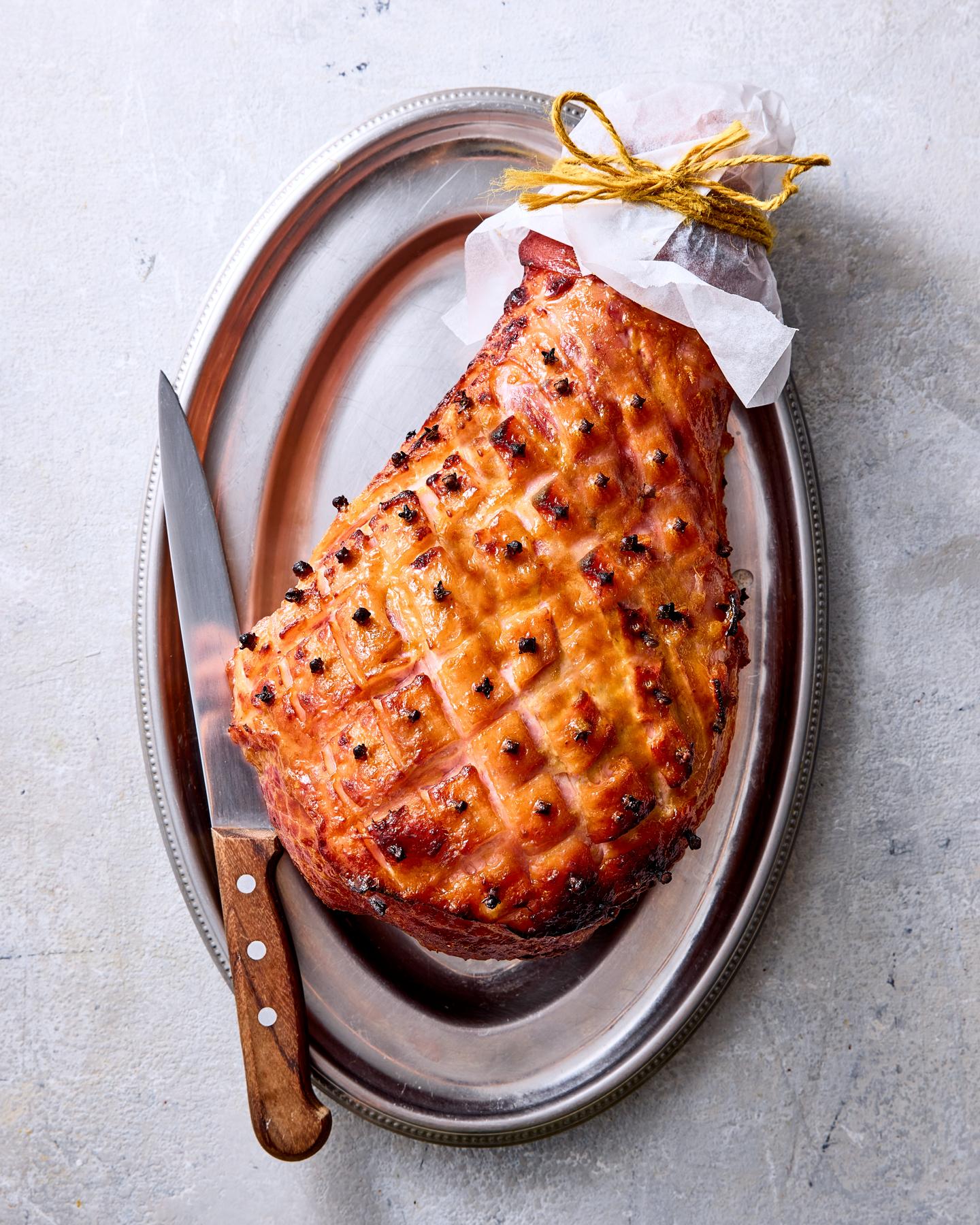
Once the skin is removed, score the fat to create a diamond pattern by making shallow cuts about 3-4cm cm apart, being careful not to cut into the meat.
Step 5
Press a clove in the centre of each diamond. Wrap the hock with aluminium foil or baking paper to prevent it from burning in the oven. Place the ham on top of a lightly greased wire rack in a baking dish. Add a cup of water or wine to the bottom of the pan to stop the glaze sticking and burning. The ham is now ready for glazing.
Step 6
Using a spoon or brush, brush 3/4 of the glaze over the ham. Place in the oven and bake for about 40 minutes, basting the ham every 15 minutes or so with the remaining glaze and any extra juices from the bottom of the baking dish. You will know the ham is ready when the glaze is rich, shiny and a little caramelised.
Step 7
Remove from the oven and serve when Christmas lunch is ready!













 No products in the cart.